1776 — 2026

"The Land of the Free"

The Declaration of Independence proclaimed that all men are created equal and endowed with unalienable rights. The documentary record of American law tells a more complicated story.

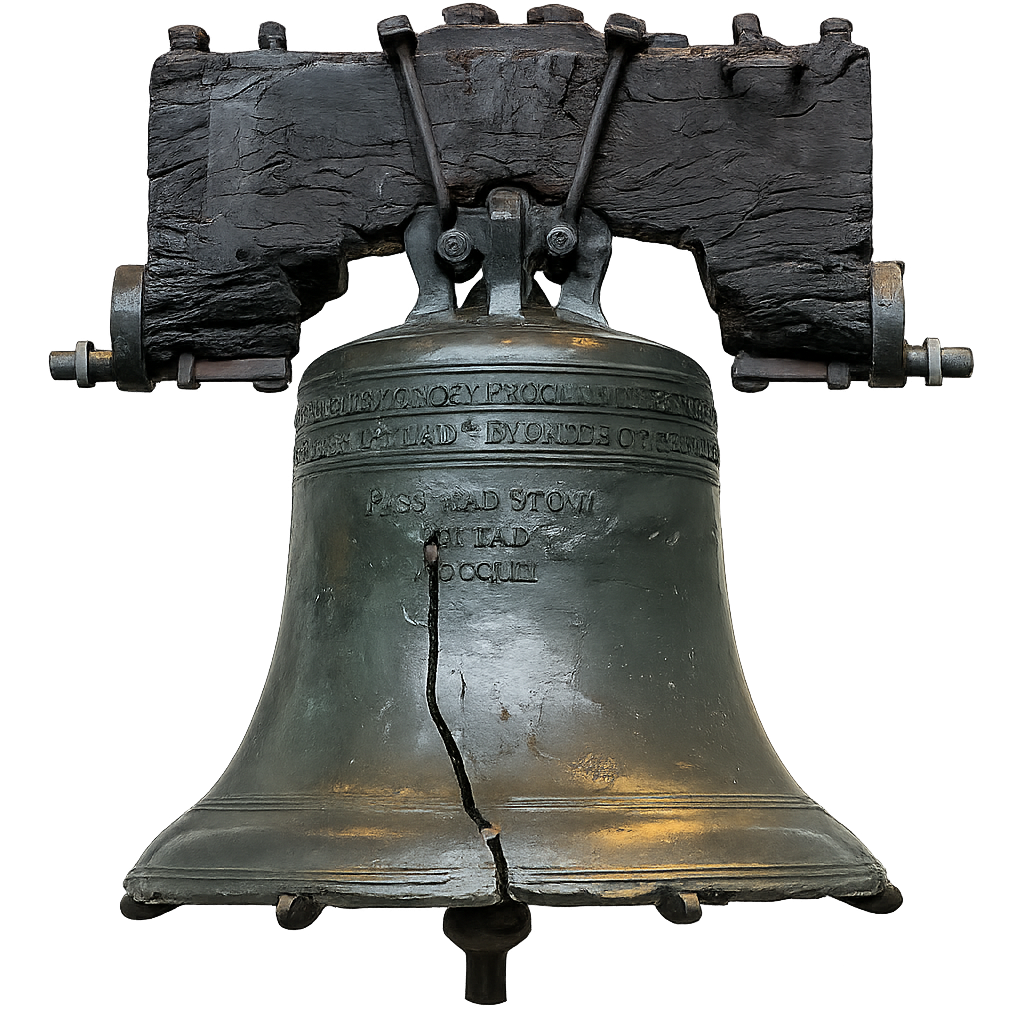
The Liberty Bell, Philadelphia — showing the famous crack

"Proclaim liberty throughout all the land unto all the inhabitants thereof."

— Leviticus 25:10, inscribed on the Liberty Bell, 1752
The original bell cracked during testing and was recast. The surviving bell's famous crack developed in 1846.

1798 First federal law imposing criminal penalties on political speech (Sedition Act)
120,000 Japanese Americans forcibly interned, 1942
1967 Year interracial marriage became legal in all states
Dozens Documented U.S. military, covert, and political interventions since the late 19th century
About This Project

The Gap Between Promise and Record

The United States was founded on a declaration that "all men are created equal" and possess "unalienable rights" including "Life, Liberty and the pursuit of Happiness." These words, written in 1776, remain the defining statement of American national identity.

This site does not dispute that aspiration. It documents what the actual legislative and judicial record shows about how those rights have been granted, withheld, and restricted across 250 years of American governance.

Every claim on this site is drawn directly from primary sources: Acts of Congress, Supreme Court decisions, Executive Orders, and official government reports. Where the document speaks, it is cited. No claim is made that cannot be verified against the original record.

"We hold these truths to be self-evident, that all men are created equal, that they are endowed by their Creator with certain unalienable Rights, that among these are Life, Liberty and the pursuit of Happiness." — Declaration of Independence, July 4, 1776
"The Congress shall have Power… To establish an uniform Rule of Naturalization…" — U.S. Constitution, Article I, Section 8 — the basis for centuries of racially restrictive immigration law
Seven Eras of Restriction

Explore by Historical Period

Beyond Its Borders

American Interference in Other Nations' Freedom

The United States has repeatedly invoked the cause of freedom to justify military, political, and economic intervention in other sovereign nations. The documented record — drawn from declassified CIA documents, State Department records, and Congressional investigations (notably the 1975 Church Committee) — shows a pattern of actions that frequently undermined democratic governance, supported authoritarian regimes, and destabilised elected governments.

1893 Hawaii — annexation of independent kingdom
1898 Philippines — occupation after Spanish-American War
1898 Cuba & Puerto Rico — territorial control
1915 Haiti — military occupation (19 years)
1953 Iran — CIA overthrow of elected PM Mosaddegh
1954 Guatemala — CIA overthrow of elected Árbenz
1960 Congo — CIA plot against PM Lumumba
1961 Cuba — CIA-directed Bay of Pigs invasion
1955–75 Vietnam — military intervention, 500,000 troops at peak
1973 Chile — CIA destabilisation, coup against Allende
1979–89 Afghanistan — CIA funding of mujahideen
1980s Nicaragua — Contra funding in defiance of Congress
1989 Panama — invasion condemned by UN General Assembly
2001 Afghanistan — invasion, 20-year occupation
2003 Iraq — invasion based on unsubstantiated intelligence
2011– Syria — covert support, airstrikes, ongoing presence
Selected cases only — full documentation on the Foreign Interference page

View Foreign Interference Record →
Cross-Era Patterns

Recurring Themes

The Other Side of the Record

Expansions of Freedom — Won, Not Given

The history of American liberty is not only a history of restriction. It is also a history of sustained struggle against those restrictions — a tug-of-war in which rights denied were repeatedly fought for, and sometimes won. These victories are part of the same documented record.

What the record shows, however, is that virtually every expansion of freedom was achieved against institutional resistance, often over decades and at significant human cost. The amendments were contested. The court decisions were fought. The legislation was opposed. They did not flow naturally from the founding promise — they were extracted from it.

1865

Thirteenth Amendment — Abolition of Slavery

Formally abolished slavery 89 years after the Declaration proclaimed universal liberty. Passed after a civil war that killed approximately 620,000 people.

1868

Fourteenth Amendment — Equal Protection

Granted birthright citizenship and equal protection under law — overturning Dred Scott. Subsequently weakened by the Supreme Court in the Slaughterhouse Cases (1873) and gutted in practice by Plessy v. Ferguson (1896) for nearly 60 years.

1870

Fifteenth Amendment — Black Male Suffrage

Prohibited denial of the vote on grounds of race. Systematically undermined through poll taxes, literacy tests, grandfather clauses, and violence until the Voting Rights Act of 1965.

1920

Nineteenth Amendment — Women's Suffrage

Granted women the right to vote 144 years after the Declaration. The suffrage movement faced decades of legislative defeat, arrest, and forced feeding of hunger-striking protesters before passage.

1954

Brown v. Board of Education

Overturned Plessy v. Ferguson's "separate but equal" doctrine. Implementation was ordered "with all deliberate speed" — a phrase used to delay meaningful desegregation for years in many states.

1964

Civil Rights Act

Prohibited discrimination on grounds of race, colour, religion, sex, or national origin. Passed after a 60-day Senate filibuster — one of the longest in Senate history.

1965

Voting Rights Act

Prohibited discriminatory voting practices that had disenfranchised Black Americans for a century after the Fifteenth Amendment. Its core preclearance provisions were gutted by the Supreme Court in Shelby County v. Holder (2013).

1971

Twenty-Sixth Amendment — Voting Age Lowered to 18

Extended the vote to 18–20 year olds, partly in response to the argument that those old enough to be conscripted to fight in Vietnam were entitled to vote.

2015

Obergefell v. Hodges — Marriage Equality

The Supreme Court held that same-sex couples have a constitutional right to marry. Came 12 years after Lawrence v. Texas decriminalised same-sex conduct — which itself came 34 years after the American Psychiatric Association removed homosexuality from its list of mental disorders.

Each of these milestones is part of the same documented record as the restrictions on this site. The pattern they reveal is not of a system delivering on its founding promise, but of rights being won through sustained struggle against that system's resistance.

Methodology

How This Site Works

Every claim on this site is drawn from primary sources: Acts of Congress, Supreme Court decisions, Presidential Executive Orders, and official government reports and investigations. Where secondary sources are used, they are identified as such and the underlying primary documents are linked where available.

This site focuses on the documented legal and historical record — what the law said, when it said it, and who it applied to. The selection and organisation of material reflects historical scholarship. Readers are invited to draw their own conclusions.

The following repositories are the primary sources for this site's documentary record: